 Uganda
 Ghana
Ghana Liberia
 DRC
DRC Togo
Togo
World Environment Day is a reminder that climate action is not only about future ambition. It is about the practical decisions organisations make every day.
At CSquared, our mission is to help build a digitally connected Africa through open-access broadband infrastructure. As our networks expand, we recognise that this responsibility extends beyond connectivity. It includes how we plan, build, operate and maintain infrastructure in a way that supports long-term environmental and social resilience.
This World Environment Day, we are reflecting on some of the actions CSquared is taking to reduce environmental impact and support more responsible infrastructure development across our markets.
Planning with environmental and social responsibility in mind
Responsible infrastructure starts before deployment begins.
For network expansion projects and infrastructure deployments, CSquared conducts environmental and social impact assessments to identify risks, understand potential impacts and minimise our footprint and further obtain a permit from the EPA outfit of the project jurisdiction before the commencement of project execution.
This approach helps ensure that environmental and social considerations are included early in the planning process, rather than treated as an afterthought. It supports better decision-making, more responsible deployment and stronger alignment with the communities and environments in which we operate.
Reducing disruption through sustainable operations
The way infrastructure is planned and deployed matters.
CSquared uses digital-first processes to reduce paper waste and improve operational efficiency. We also optimise fibre deployment routes to help reduce unnecessary environmental disruption during network expansion.
Route optimisation is not only an operational priority. It is also an environmental one. By planning more efficiently, we can reduce avoidable disruption, improve deployment quality and support more sustainable network growth.
CSquared does most of its stakeholder engagement via video conference calls and only travels when necessary, both locally and internationally. This largely contributes to reducing the carbon footprint of its operations.
Managing e-waste responsibly
Digital infrastructure depends on equipment, and that equipment must be managed responsibly throughout its lifecycle.
CSquared works with local, certified e-waste recyclers to safely dispose of decommissioned network equipment. This helps ensure that materials are handled appropriately and that obsolete equipment does not create unnecessary environmental harm.
As digital infrastructure continues to grow, responsible e-waste management will remain an important part of sustainable operations.
Working with responsible suppliers and contractors
Infrastructure is delivered through partnerships.
That is why CSSquared applies strict environmental, health, safety and social requirements for high-risk contractors. We also carry out supplier due diligence to promote ethical business practices across our value chain.
Responsible infrastructure depends not only on what we build, but on how it is built and who we build it with.
Supporting resilience through operational preparedness
Environmental responsibility and operational resilience are closely connected.
CSquared maintains emergency preparedness and business continuity measures that support long-term infrastructure resilience. This is essential for networks that businesses, operators, public institutions and communities depend on.
Resilient digital infrastructure helps keep people and economies connected, especially during periods of disruption.
Turning awareness into action through employee engagement
Sustainability is not only a policy issue. It is a people issue.
CSquared runs ongoing employee awareness and training programmes focused on ESG, environmental management, health and safety, and responsible business conduct.
By building awareness across the organisation, we help ensure that environmental and social responsibility is part of everyday decision-making.
Uganda solar project: responsible infrastructure in action
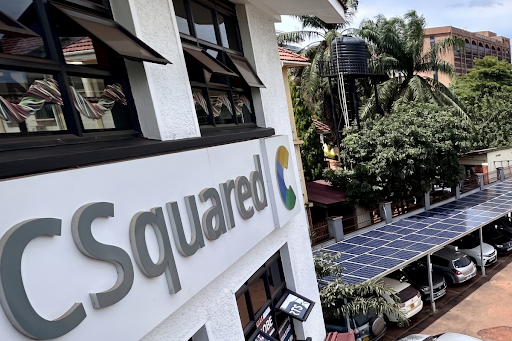
In Uganda, CSquared has implemented a solar project designed to support more resilient and efficient operations.
The project was developed to provide a reliable backup power solution for critical loads, reduce electricity consumption from the utility grid and reduce generator fuel consumption.
The system includes solar panels, inverters, circuit protection and battery backup to support critical infrastructure during outages. It also enables remote monitoring, helping the team track performance and respond to system needs.
The reported benefits include backup support for the server room, reduced commercial power consumption, reduced generator fuel use, cost savings and scalability for future expansion.
This is a practical example of how environmental thinking and operational resilience can work together.
Responsible infrastructure for a connected future
Digital infrastructure is essential to Africa’s future. It supports businesses, public services, mobile operators, digital platforms and communities.
But as that infrastructure grows, it must be planned and operated responsibly.
Our open-access model supports more efficient infrastructure development. By enabling multiple operators to share a single physical network, we can help reduce unnecessary duplication, limit repeated ground disruption and support a lower collective footprint as connectivity expands.
This World Environment Day, we recognise that the future of connectivity must also be a future of responsibility.
For climate. For our future.