 Uganda
 Ghana
Ghana Liberia
 DRC
DRC Togo
Togo
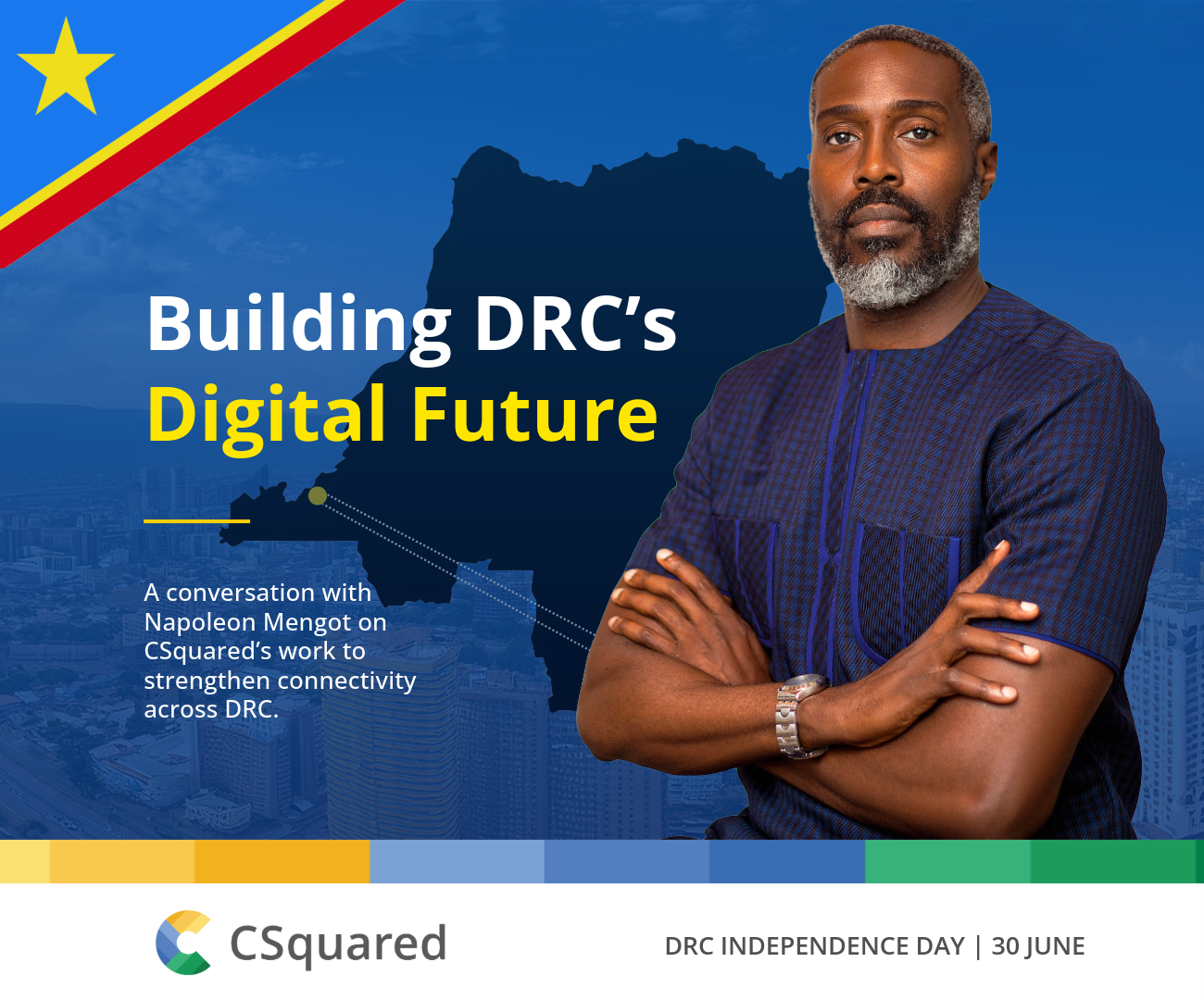
As the Democratic Republic of Congo marks Independence Day, CSquared spoke with Napoleon Mengot, Country Manager for CSquared DRC, about the country’s digital opportunity, the role of fibre in national development, and how open-access infrastructure can help connect DRC’s people, businesses and regions more reliably.
CSquared: As DRC celebrates Independence Day, what does this moment mean to you as someone helping build the country’s digital infrastructure?
Napoleon Mengot: There is a phrase I like: independent yet connected. Independence means having the ability to do things your own way, but there is also a much bigger world out there. For DRC, the opportunity is to put the country on the map in every way possible.
DRC is unique. It is the only country in Africa with two time zones and it borders nine different countries. That creates a major connectivity opportunity, not only for mining, but also for music, film, trade and many other areas of economic life. None of that potential can be fully realised without strong connectivity.
CSquared: How would you describe DRC’s digital opportunity today?
Napoleon: DRC has a very large land mass, a population of more than 100 million people, and a very young population. That alone creates huge potential for digital services, entrepreneurship and new forms of business.
Today, a lot of commercial activity is concentrated in Kinshasa and Lubumbashi. Kinshasa is the most populous and urban city, while Lubumbashi is another major business centre. Kolwezi is also extremely important because of its role in the mining sector. For CSquared, the aim is to support connectivity not only in the biggest commercial centres, but over time in more regions and cities across the country.
CSquared: Why is fibre so important for DRC’s next phase of development?
Napoleon: In a country as vast as DRC, different technologies have a role to play, including satellite and wireless. But fibre brings something very important: stable quality over long distances. In challenging terrain, through rainforests or across large landscapes, line-of-sight connectivity can be affected by geography or weather. Fibre helps maintain quality.
It is also important for security. For sectors such as banking, healthcare and enterprise services, fibre supports secure, end-to-end connectivity. That matters when you are building the infrastructure that critical institutions depend on.
CSquared: Can you describe CSquared’s current network presence in DRC?
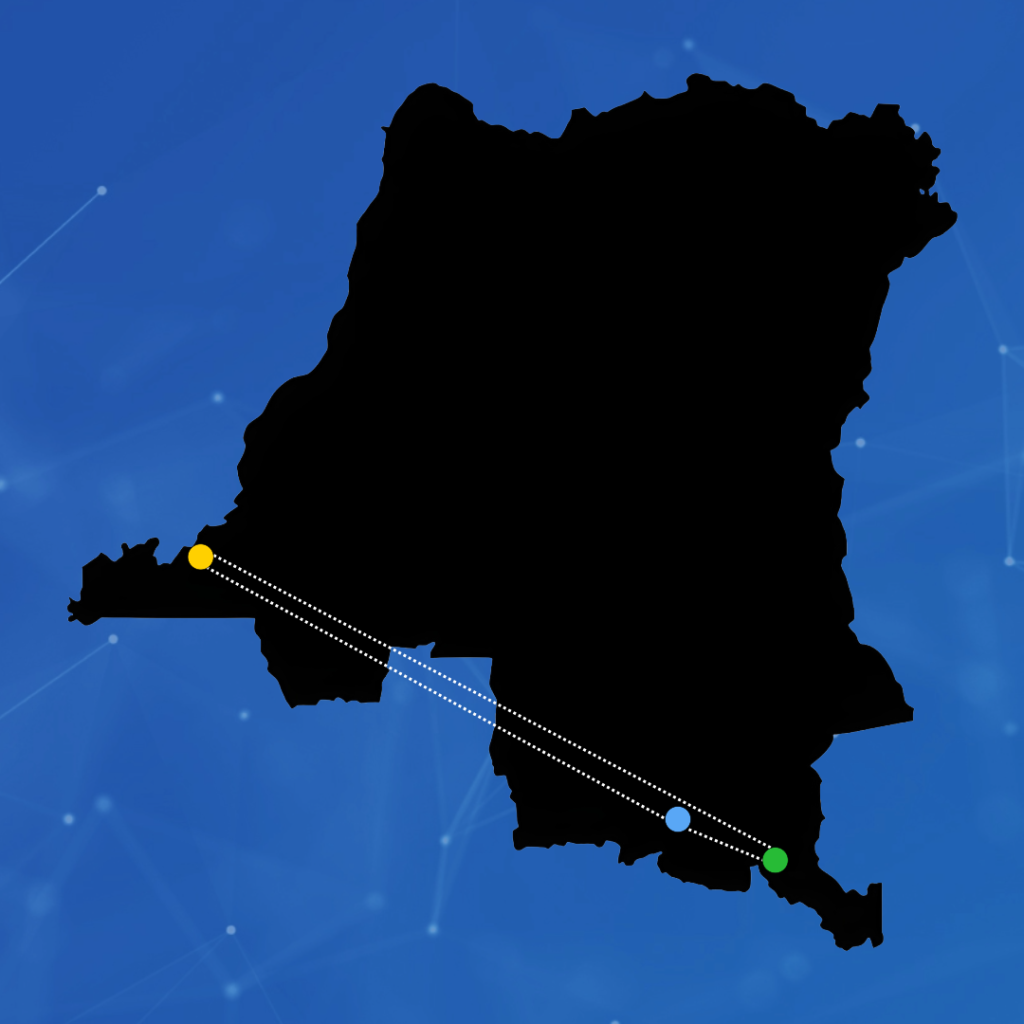
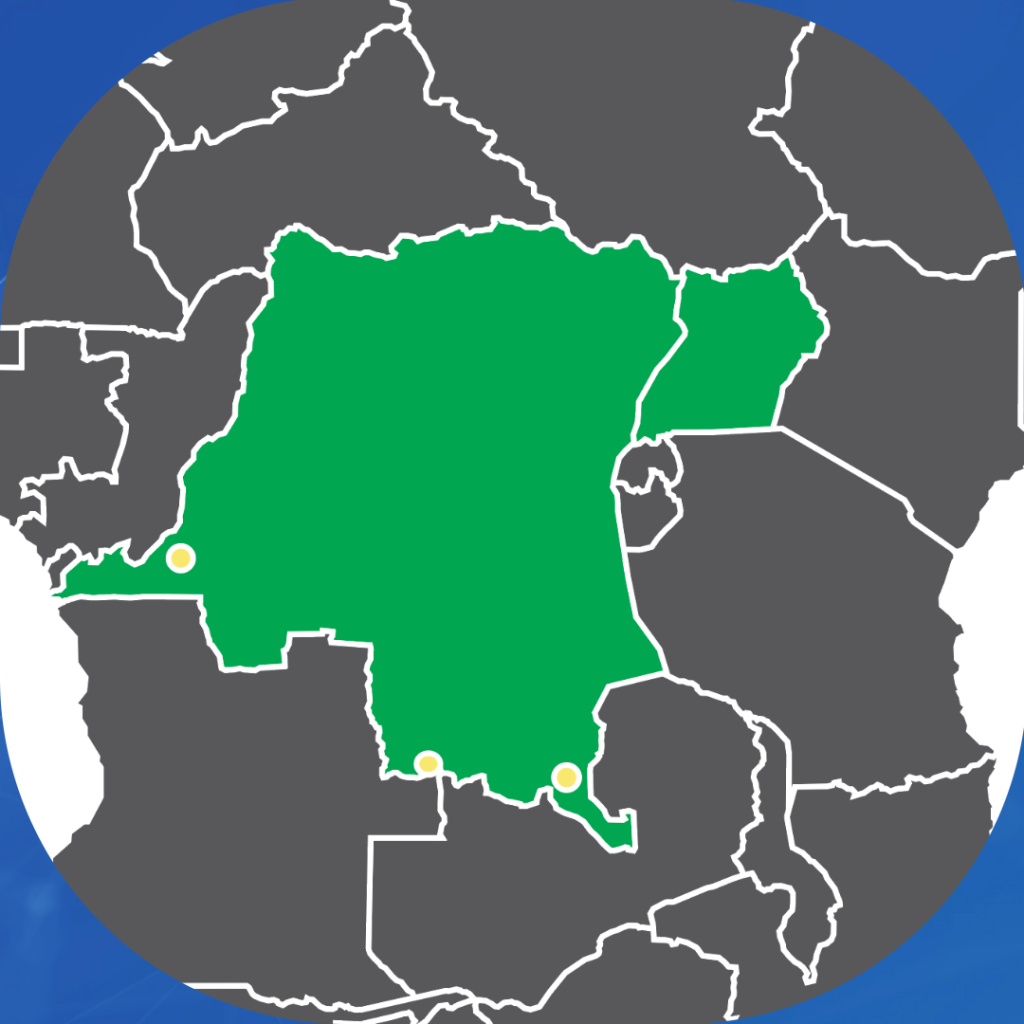
Napoleon: CSquared is currently present in Kinshasa, Lubumbashi and Kolwezi. Each city plays a different role. Kinshasa is the largest commercial centre. Lubumbashi is a major business and mining hub. Kolwezi is one of the most important mining centres in the country.
In each of these cities, we have built metropolitan networks — intra-city fibre networks that allow us to create a strong local footprint. From these networks, we support fibre-to-the-building, fibre-to-the-tower, fibre-to-the-business and other forms of last-mile connectivity.
Across DRC, we have fibre in Kinshasa, Lubumbashi and Kolwezi, and we expect the national footprint to continue growing. The objective is to create a platform that mobile network operators, internet service providers, enterprises and data centres can use to serve customers more efficiently.
CSSquared: What makes CSquared’s open-access model important in DRC?
Napoleon: Without an open-access provider, each mobile operator or ISP may have to build its own network for its own use. That creates duplication, cost and complexity.
CSquared is wholesale and carrier-neutral. We build infrastructure that multiple licensed operators can use. That helps reduce the capital expenditure burden for customers, because they do not each need to build the same infrastructure independently. We also take on the operation and maintenance, which allows our customers to focus on delivering their own services.
This model helps lower the barrier to entry, especially for smaller ISPs. We can support different commercial models, including long-term IRUs and monthly recurring models, depending on the customer’s needs.
CSquared: What have been some of the key milestones in the past year?
Napoleon: One major milestone has been the expansion of the Lubumbashi network through a co-build project with Airtel, which significantly increased our footprint in the city. Another important milestone has been establishing the point of presence in Kolwezi, which allows us to move forward with customer opportunities that have been developing there.
We have also worked on upgrading the Kinshasa metro network. For us, the work does not end when the fibre is built. The real measure is service quality, uptime and the ability to support customers reliably.
CSquared: Why are redundancy and diverse routes so important?
Napoleon: In any network, a single connection creates a single point of failure. If there is road construction, a fibre cut or another incident, customers can experience downtime if there is no alternative route.
That is why diversity matters. Having more than one route helps keep services running while repairs are carried out. We often say that we do not just sell fibre connectivity; we sell service levels. The real work starts after the sale, because customers depend on us to keep the connection available.
CSquared: How does this infrastructure improve the experience for end users?
Napoleon: When towers are connected by fibre, mobile users can benefit from more stable connectivity. In the past, towers were often connected through radio or satellite links, which can be affected by weather or line-of-sight limitations. Fibre helps improve quality and stability.
The same applies to buildings. As cities grow and more high-rise buildings appear, wireless paths are obstructed. Fibre helps overcome those limitations and gives businesses a more dependable connection.
CSquared: Looking ahead, what are CSquared’s priorities for DRC?
Napoleon: One priority is to expand the footprint in Kolwezi, because it is our newest network and has strong potential. We also want to offer a broader variety of products to serve different customer needs and scale faster through GPON infrastructure.
Over time, we will also explore opportunities in other cities where quality connectivity is needed. The demand will continue to grow as fintech, cloud services, agritech and AI-enabled tools require more bandwidth, lower latency and more secure connectivity.
CSquared: What role can DRC play in Africa’s wider digital economy?
Napoleon: DRC borders nine countries, many of them landlocked. With the right terrestrial infrastructure, DRC can help improve direct connectivity between African markets. Instead of traffic needing to travel out of Africa and back again, stronger terrestrial networks can reduce latency, lower costs and keep more value within the African digital ecosystem.
That is part of the bigger vision: a digitally connected Africa. And because of DRC’s size and position, building a digitally connected DRC is essential to that future.
CSquared: What message would you share with DRC on Independence Day?
Napoleon: We are independent yet connected. CSquared is here to help strengthen that connectivity, working with partners across the ecosystem to support the development of a more digitally connected Democratic Republic of Congo.